How WOOW Golf chooses the weight of every kids golf club
Club weight, not club length, decides whether a young child can swing properly. Here is the testing behind the weight of each WOOW club and how to check any kids club yourself.

Ferdinand Witt-Dörring
Co-founder, WOOW Golf
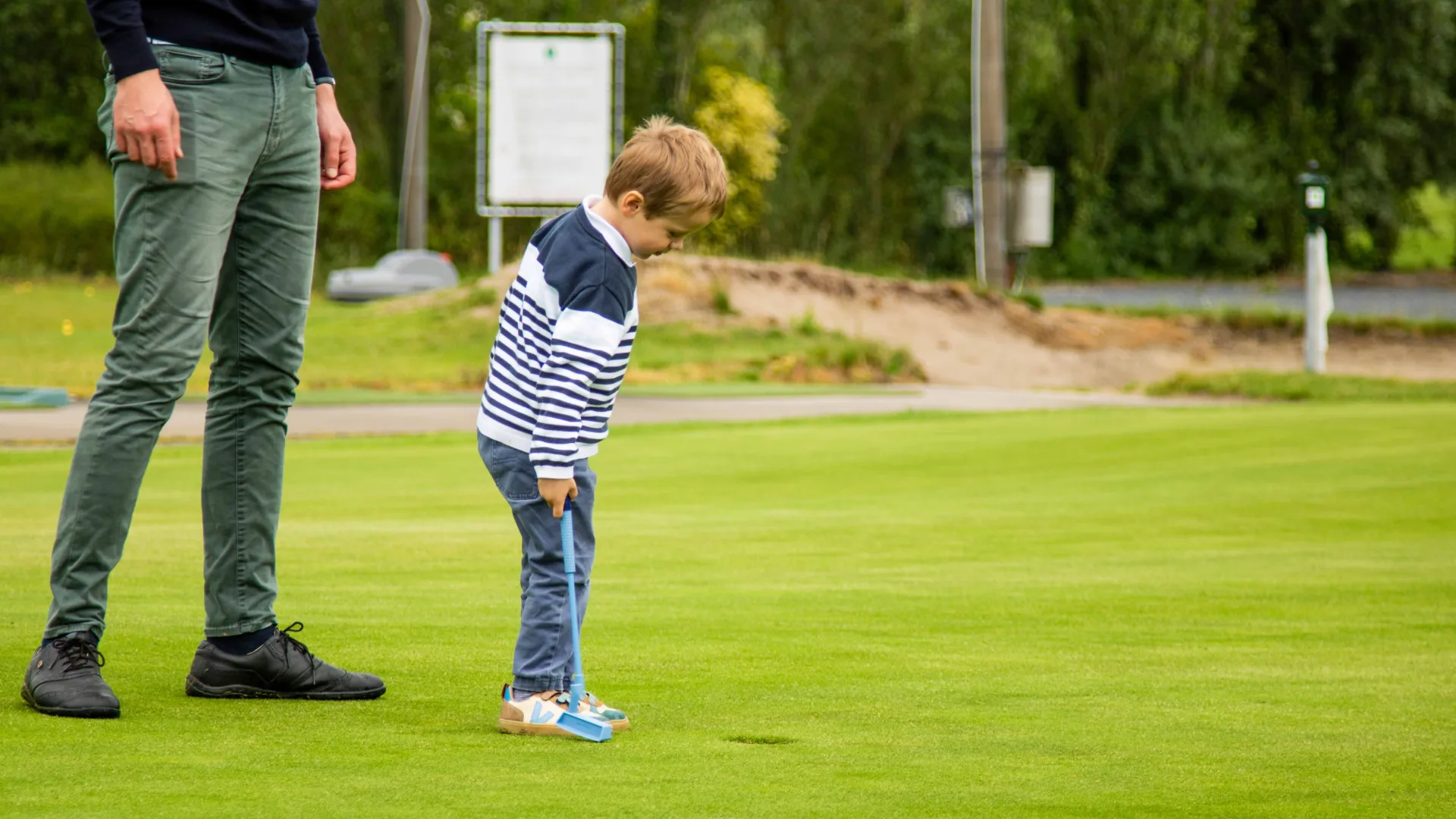
Ask any golf coach what ruins a child's first swing and the answer is rarely talent. It is equipment. A club that is too heavy turns a natural, joyful movement into a struggle, and a three year old who struggles for ten minutes will happily go and do something else instead.
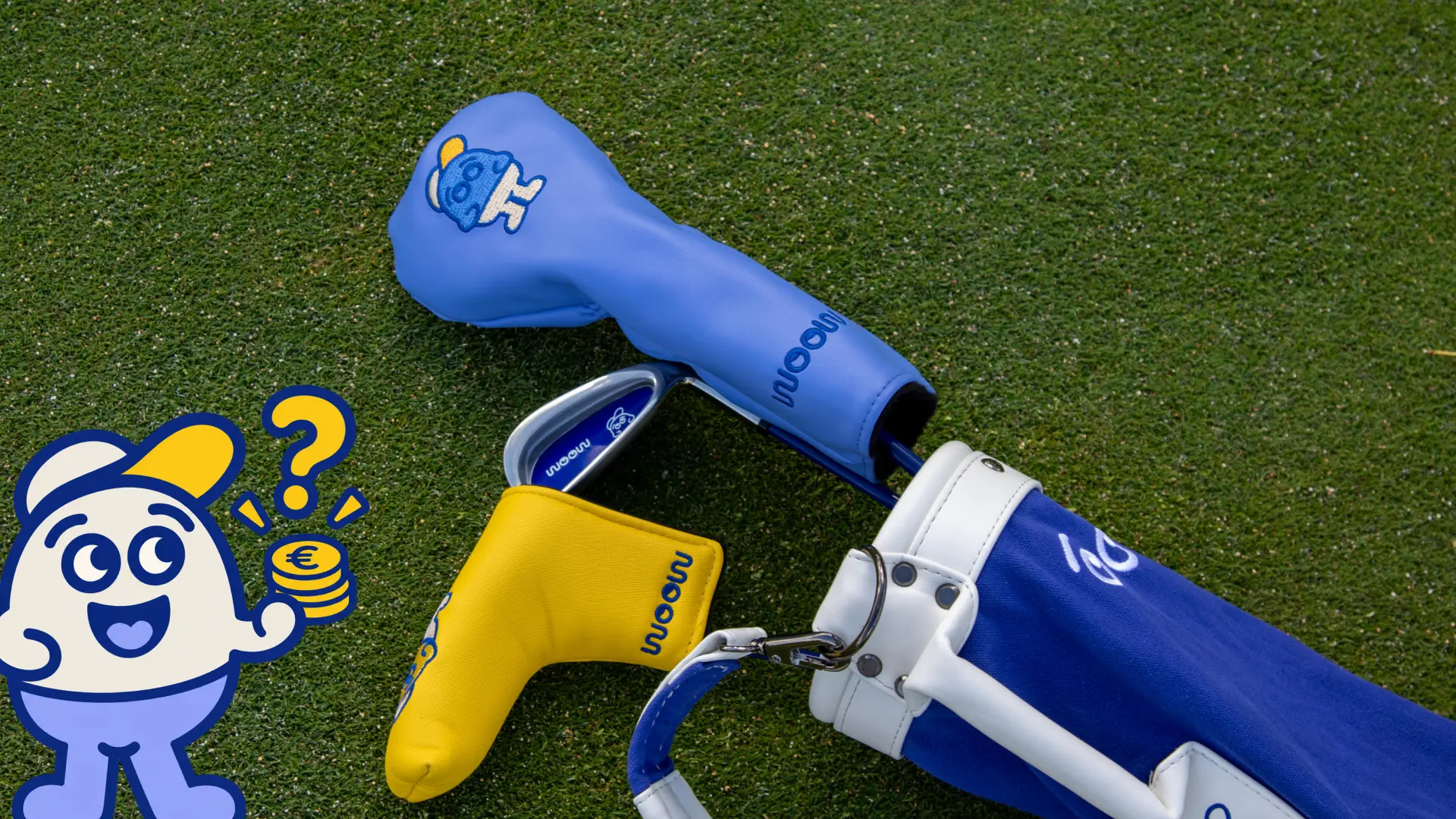
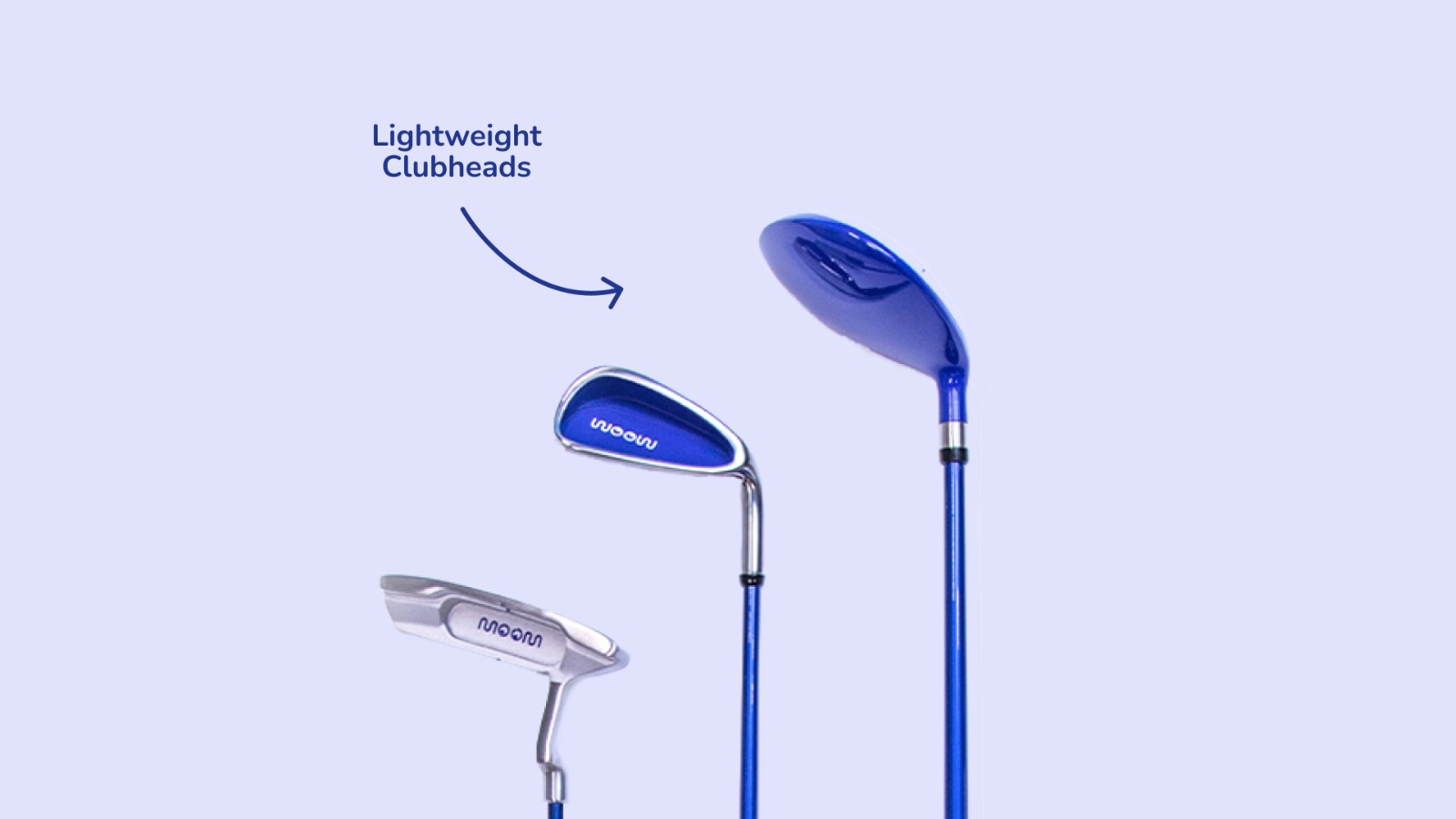
That is why every WOOW Golf club is weighted for its own job instead of being shrunk down from an adult model. The driver weighs 210 grams, the putter 250 grams and the iron 7 270 grams. Not one flat number, but a weight tested per club with the children we design for.
Why club weight matters more than club length
Most parents shopping for kids golf clubs look at length first. It is the visible measurement, it is printed on the box and it is easy to compare against a child's height. Weight is invisible, and it is the thing that actually decides whether a child can swing properly.
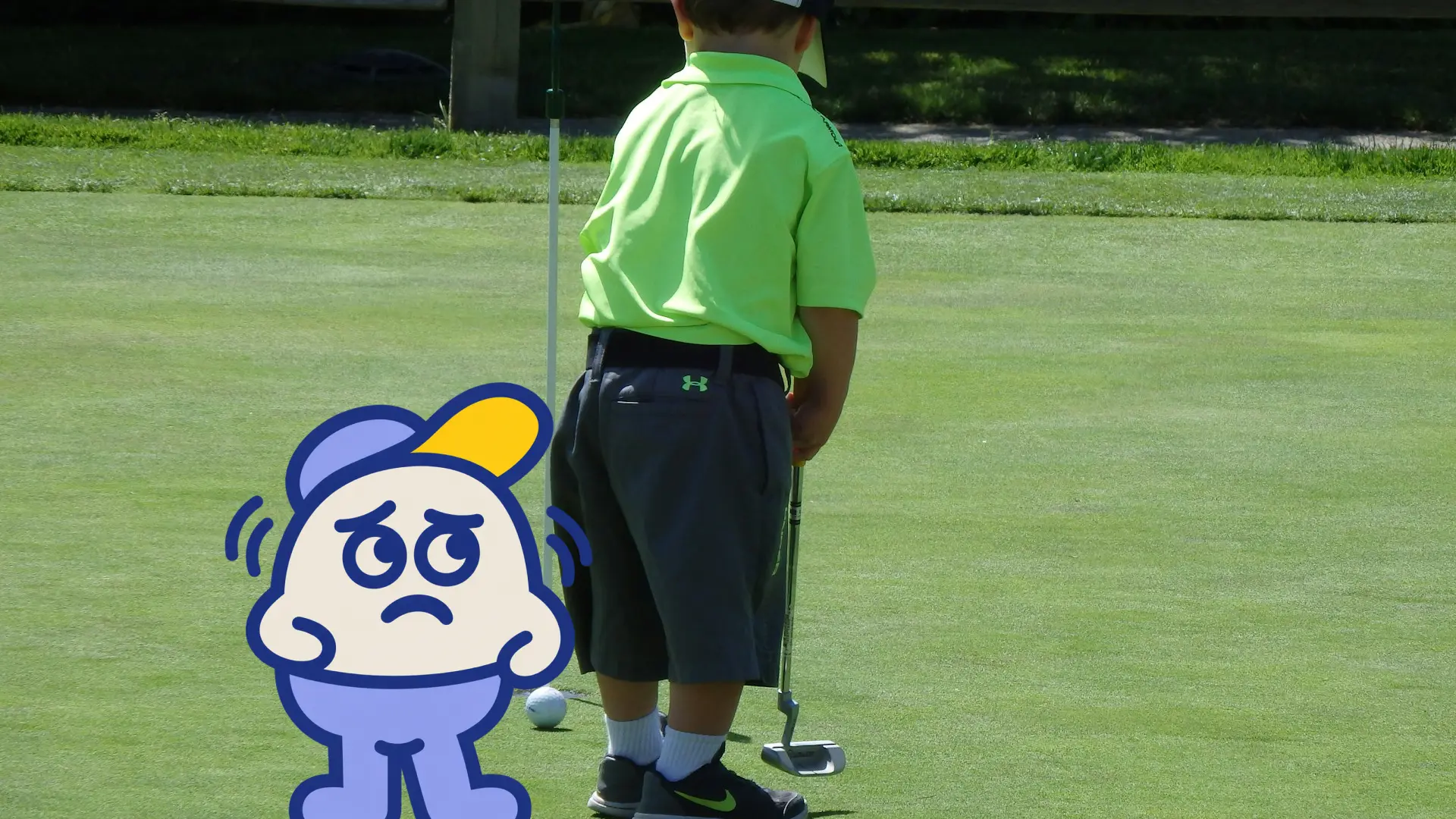
A golf swing is a rotation. The body turns, the arms follow, the clubhead arrives last. For that chain to work, the child has to be able to let the club swing rather than carry it. When the club is too heavy for their strength, the sequence collapses:
- The arms take over from the body, because arms feel stronger than a turn
- Balance shifts onto the back foot to counter the weight
- The swing shortens and speeds up into a chop
- Fatigue arrives within a handful of swings
Between the ages of three and five, strength, coordination and balance are all still developing at once. A club that is 100 grams too heavy is not a small inconvenience at that age. It is the difference between a movement that works and one that does not.
How we landed on these weights
We did not pick the number from a catalogue. We built clubs at different weights and watched children between three and five use them, session after session, in living rooms, gardens and clubs around Antwerp.
Three things showed up consistently:
- Above roughly 300 grams, children under five started to muscle the club with their arms and lost their balance at the finish.
- Below about 180 grams, the club felt like a toy. Children could not feel where the head was, so they lost the timing that makes a swing repeatable.
- In between, children swung freely and still felt the head arrive at the ball, and the ideal point in that window turned out to be different for each club.
So the driver, the club that has to be swung fastest, sits lightest at 210 grams. The putter at 250 grams needs mass to roll the ball smoothly rather than speed. The iron 7 at 270 grams carries a little more head weight so the child feels the strike. Each one is heavy enough to give feedback and light enough that a small body can rotate around it without compensating.
A club a child can control is a club a child will pick up again tomorrow.
What a lighter club changes in practice
Contact happens sooner
Children learn golf through repetition and feel, not force. When the club is controllable, the ball gets hit. When the ball gets hit, the child wants another go. Consistent contact in the first sessions is the single strongest predictor of whether a young child stays interested.
The right movement pattern gets built first
Habits formed in the first months are the ones that stick. A child who learns to rotate rather than lift is not learning a beginner version of the swing that has to be unlearned later. They are learning the real thing at their own scale.
Sessions last longer
Fatigue is quiet. A child rarely says "this club is too heavy", they simply lose interest and wander off. Lighter clubs extend the session from five minutes to twenty, and those extra minutes are where the skill is built.
Posture and joints stay protected
Swinging a load that is too heavy for a developing body encourages compensations in the back and shoulders. Keeping the load appropriate is basic, uncontroversial care.
Weight is one part of a whole design
The right weight only works if the rest of the club is designed around it. Grip circumference has to match small hands, or the child squeezes and stiffens the wrists. The head needs enough loft to get the ball airborne at low swing speeds, because a ball that never leaves the ground kills the fun faster than anything else. And the balance point matters as much as the total: the same grams feel completely different depending on where they sit along the shaft.
Our clubs put the mass where a child can sense it without fighting it, which is why the WOOW full set for ages three to five works as a system rather than as five separate objects.
What to check before you buy any kids golf club
If you are comparing brands, three quick tests tell you most of what you need:
- Weigh it. A kitchen scale is enough. For a child under five, look for roughly 200 to 270 grams per club, with the driver at the lighter end.
- Hand it over and watch the finish. If the child ends the swing balanced and facing the target, the club fits. If they fall backwards, it does not.
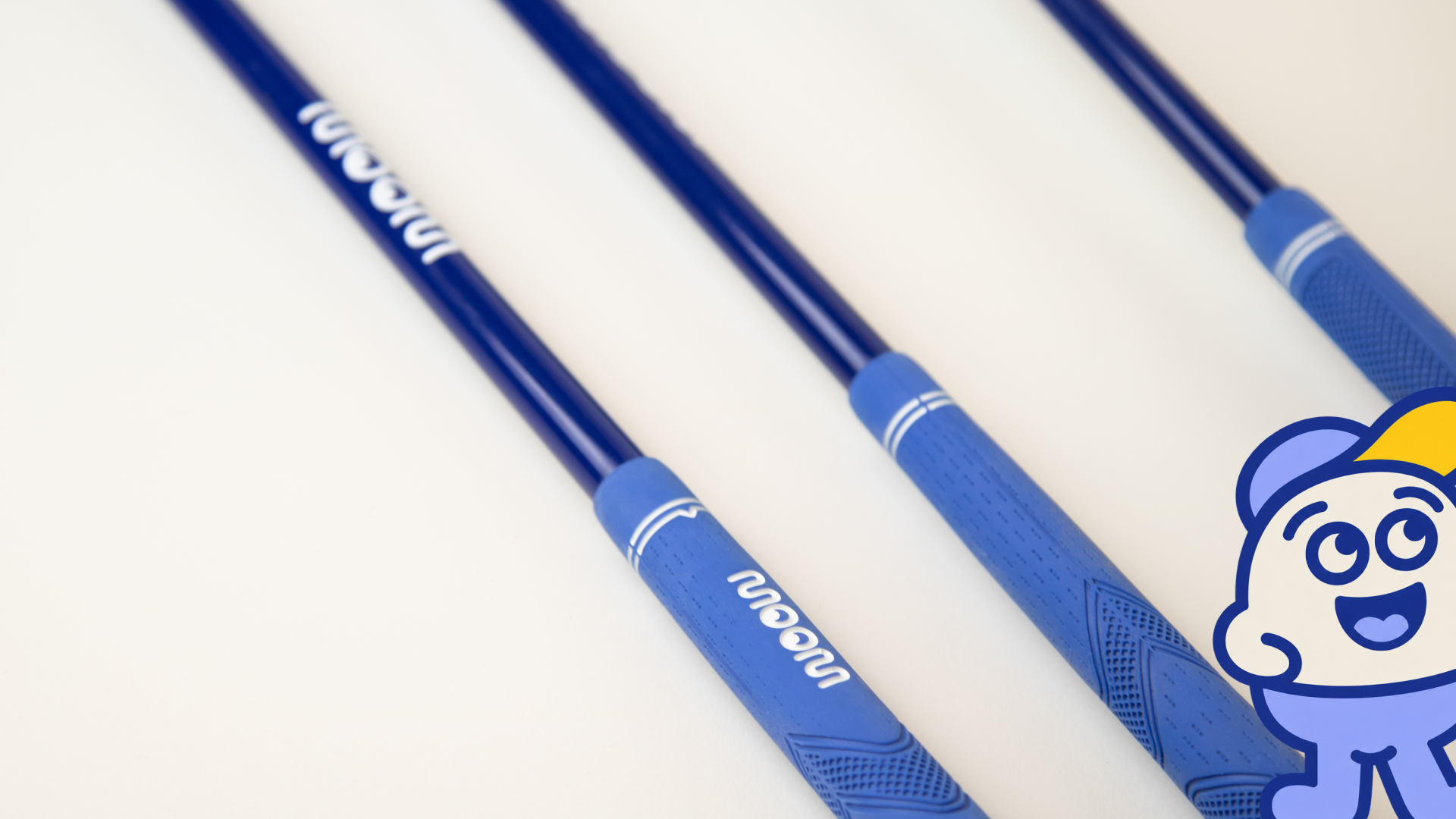
- Check the grip. Fingers should reach comfortably around it without the hand locking up.
Length still matters, but it is the second question, not the first.
The short version
Children do not need scaled down adult equipment. They need equipment designed for how they actually move. Weighting every club for its own purpose keeps kids golf free, balanced and technically sound from the very first swing, and it keeps the thing that matters most intact: the child wanting to swing again.
If you are just starting out, the WOOW Spark Putter is the easiest first step, and the toddler golf guide for ages three to five walks through the rest.
If you are comparing brands or ordering from abroad, our guide to choosing kids golf clubs in Europe brings sizing, club choice, delivery and returns together in one checklist.
Last updated 23 August 2026
Share this article