How to measure your child for golf clubs at home
Two measurements, two minutes and a wall. How to size a child for golf clubs properly, and the two checks that beat any table.

Ferdinand Witt-Dörring
Co-founder, WOOW Golf
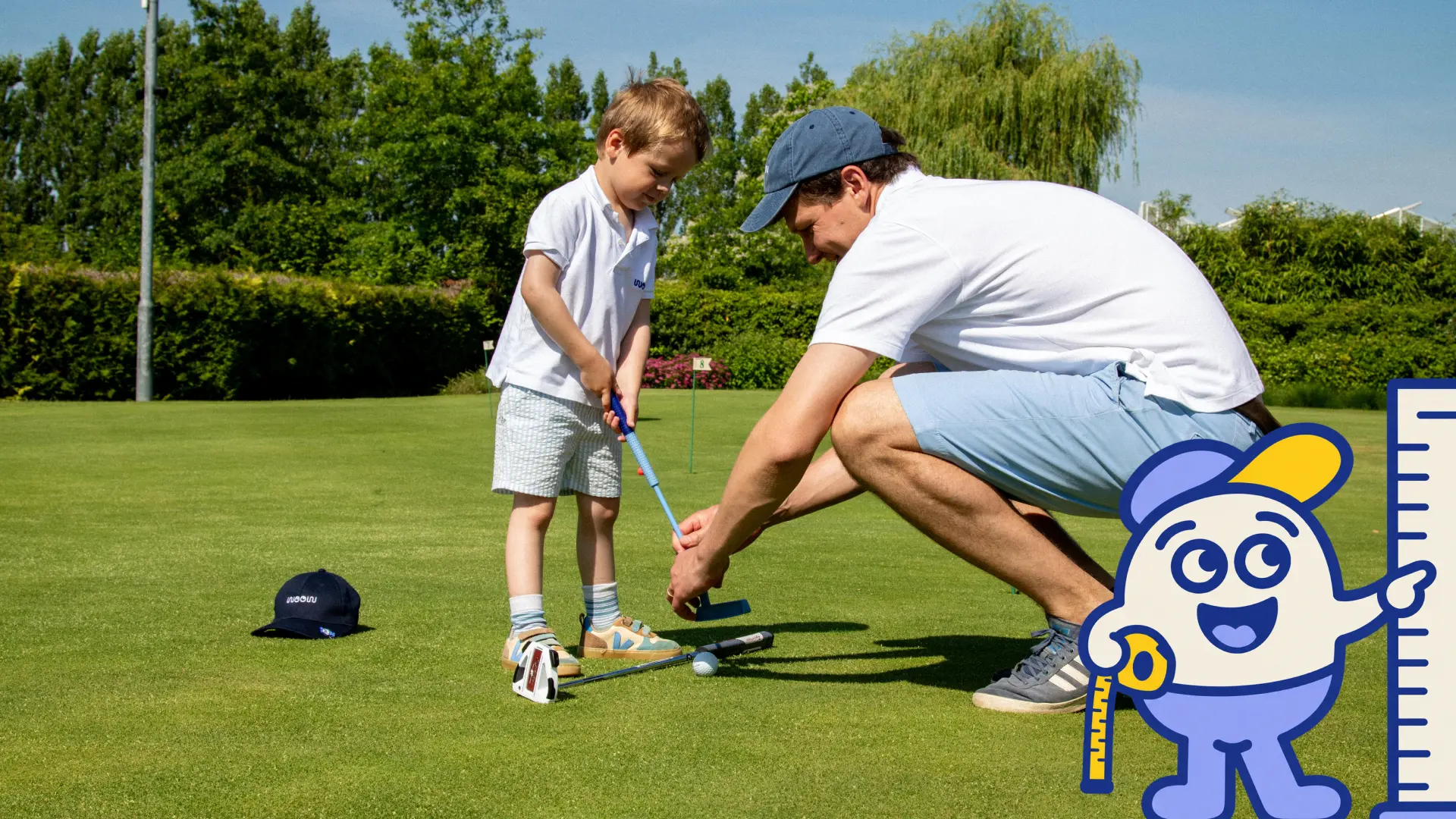
You do not need a fitting appointment to buy a first golf set. You need a wall, a pencil and two minutes. Here is how to measure a child properly and what to do with the numbers.
Measurement 1: standing height
This is the number almost every kids golf brand sizes by.
- Shoes off, heels against a wall, back straight, looking forward.
- Rest a book flat on their head, level against the wall.
- Mark the wall at the underside of the book.
- Measure from the floor to the mark in centimetres.
Do it in the morning if you want to be pedantic. Children measure up to a centimetre taller before a full day on their feet.
Measurement 2: wrist to floor
Height alone tells you a lot, but two children of the same height can have very different arm lengths, and it is the arms that reach the ball.
- Standing straight, arms hanging relaxed at their sides.
- Measure from the crease of the wrist straight down to the floor.
A longer wrist to floor measurement at the same height means a slightly shorter club usually fits better, and the reverse applies too. Adult club fitting uses the same pair of numbers, as the R&A and most coaching programmes describe.
What the numbers mean
Our kids golf club size guide turns these numbers into height bands and club lengths. As a rough guide for the youngest players, children between 85 and 110 cm are in the first band, which is most three to five year olds.
The two checks that beat any table
Once a club is in their hands:
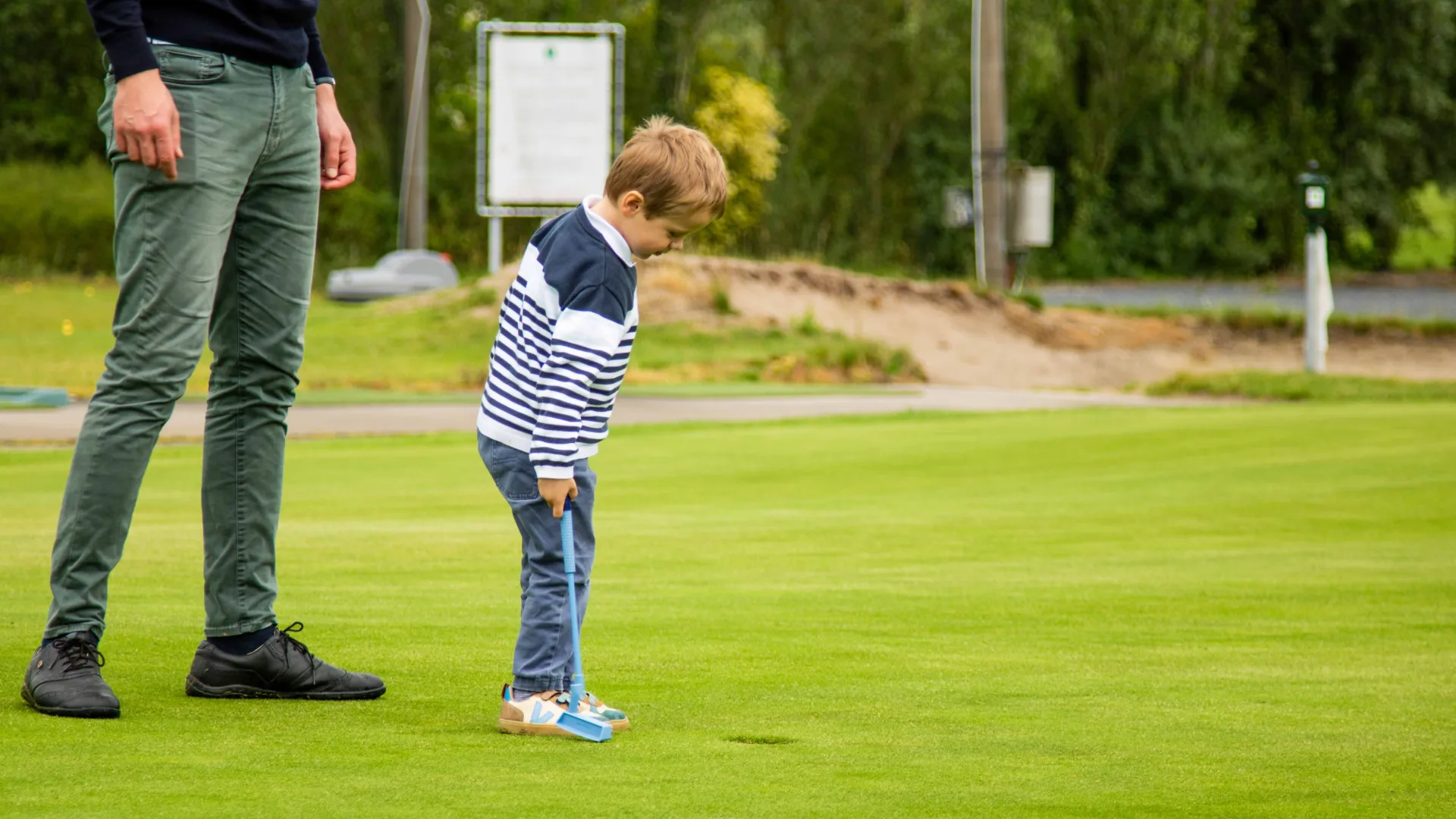
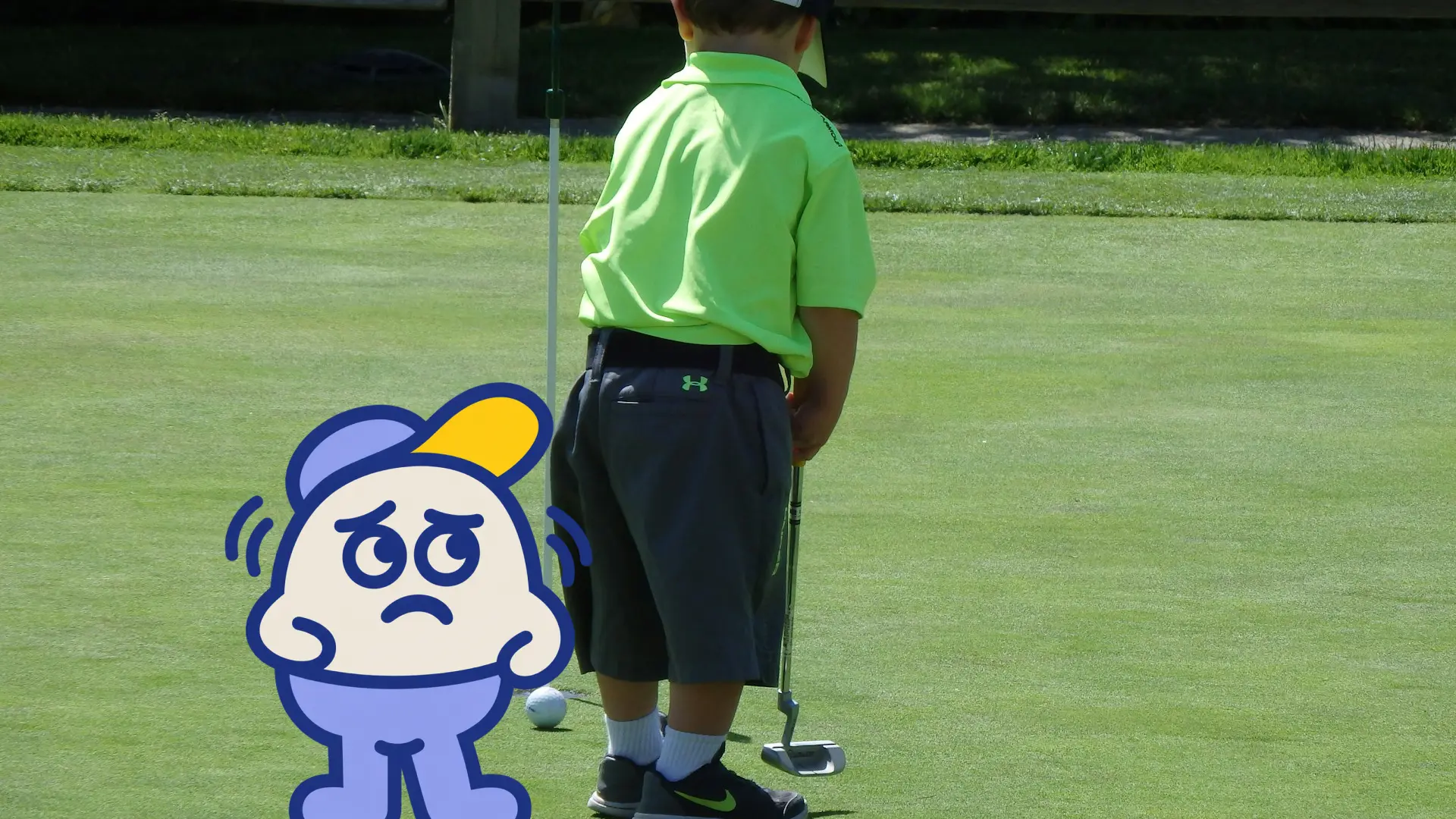
Address check. Ask them to stand to a ball as if they were about to hit it. Their arms should hang naturally, the club head should sit flat on the ground, and they should not be reaching or crouching.
Grip check. They should hold the club at the top of the grip. If they instinctively choke down several centimetres, the club is too long for them.
Signs a club is too long
- They stand too far from the ball.
- The toe or the heel of the club lifts off the ground at address.
- They swing around their body rather than up and through.
- They lose balance at the end of the swing.
Signs a club is too short
- They bend their back rather than their knees to reach the ball.
- They hit the ground behind the ball repeatedly.
- The club looks visibly small next to them, well above the standard band.
Should you size up so they grow into it?
It is tempting and it usually backfires. A club that is too long makes a child swing around themselves and grip far down the shaft, and those habits stick longer than the clubs last. Most children stay in one size for around eighteen months, so buy for the child you have today. Our page on when to move up a size covers what the transition looks like.
Do not forget weight
Length is easy to measure. Weight is what a young child actually feels. A club can be exactly the right length and still be far too heavy to swing, which is why we publish the weight of every club we make: driver 210 g, putter 250 g, iron 7 270 g. More on that in how we choose the weight of every club.
Measured and not sure which band you landed in? Send us the height and the age through our contact page and we will tell you honestly whether our sets for ages 3 to 5 fit or whether you should wait.
Last updated 17 September 2026
Share this article